Research Projects
Sequence Development
3D Volumetric Imaging Via Rosette k-Space Trajectories
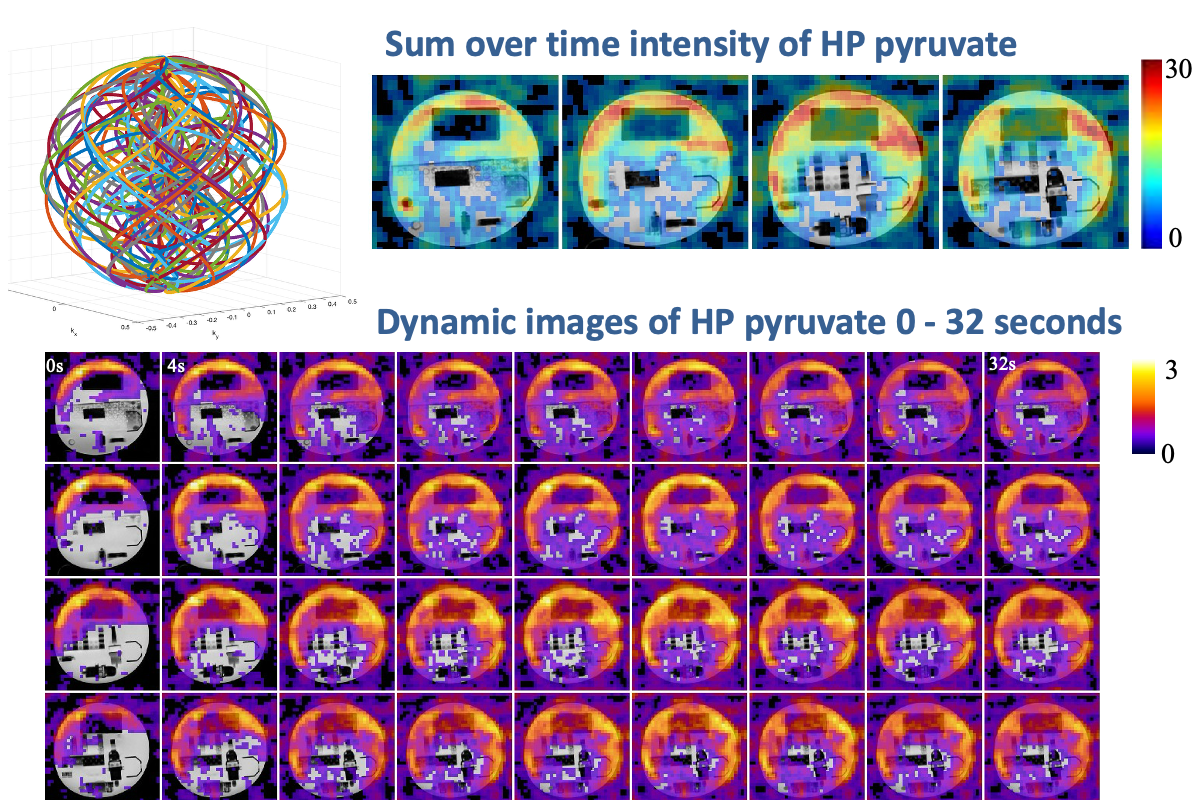
To improve the efficiency of clinical HP 13C MRI, we are developing a 3D volumetric imaging method utilizing a rosette readout trajectory. Conventional sampling schemes often face efficiency constraints; our proposed rosette method enables high-performance dynamic metabolic imaging with versatile acceleration factors. Experimental Validation: Preliminary results have been demonstrated through 3T scanner phantom experiments. Using a 15cm cylindrical container, we successfully acquired dynamic pyruvate images at 5mm isotropic resolution over a 30x30x30 cm3 field of view.
Clinical Focus
Early Treatment Response Assessment in Pancreatic Ductal Adenocarcinoma (PDA)
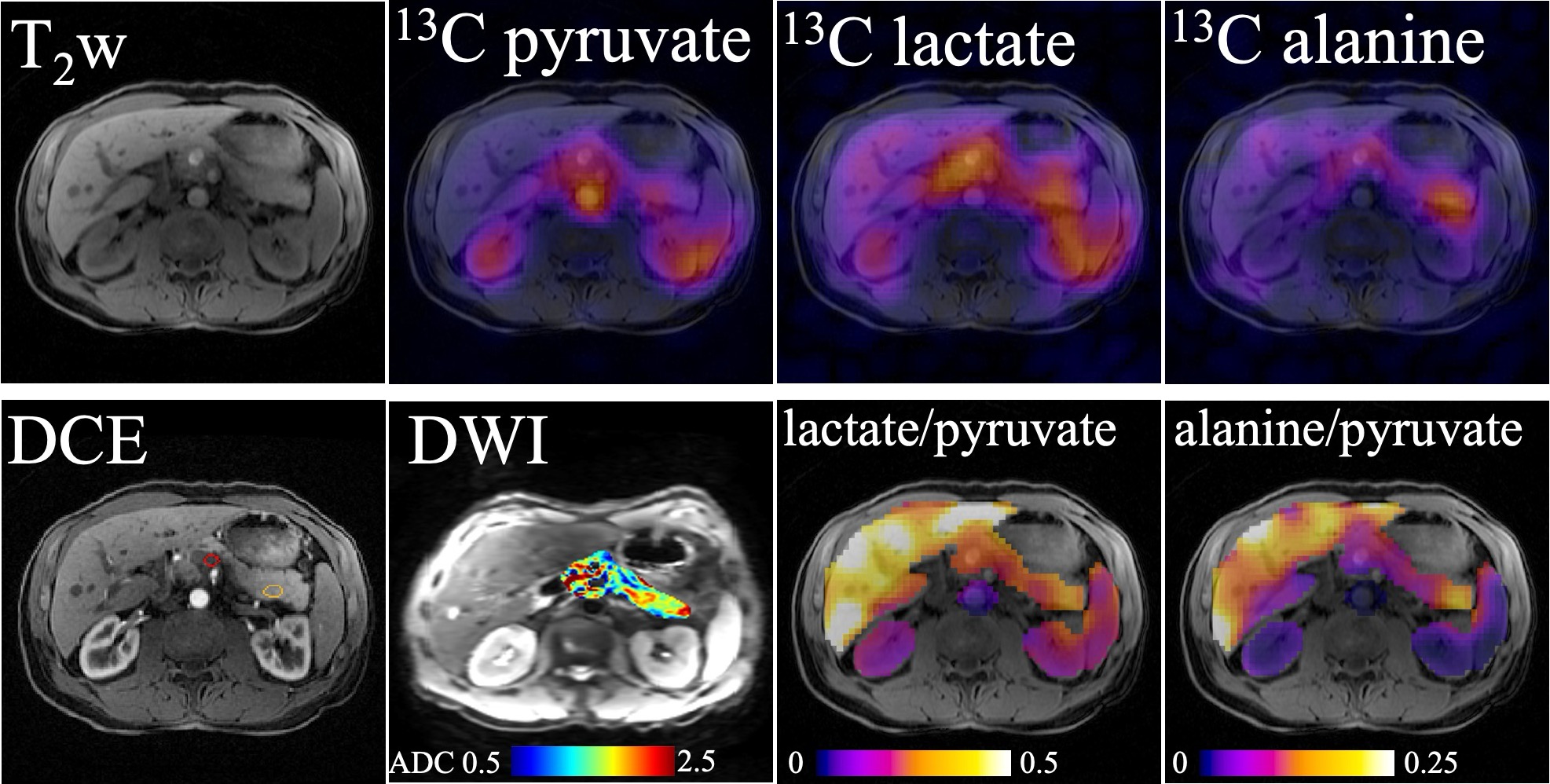
Pancreatic ductal adenocarcinoma is an exceptionally aggressive malignancy. Standard clinical assessment currently relies on tumor size measurements (RECIST), which are often delayed and limited by the infiltrative nature of the disease. Timely, non-invasive metabolic assessment is critical for identifying non-responders and adapting therapies quickly. Our research utilizes Hyperpolarized (HP) 13C MRI with [1-13C]pyruvate to interrogate real-time metabolic changes. By leveraging dynamic nuclear polarization, this technique provides unprecedented sensitivity to pathway-specific metabolic processes inaccessible by standard 1H MRI or CT. Key Findings to Date:
- Metabolic Biomarkers: In a study of seven PDA patients, all exhibited elevated pre-treatment primary tumor lactate/pyruvate ratios.
- Partial Response: Five patients who achieved a partial response (per RECIST) showed a significant post-treatment decrease (~25%) in lactate/pyruvate ratios.
- Stable Disease: Patients with stable disease showed minimal metabolic change (<5%), while standard diffusion-weighted 1H MRI (ADC) showed no significant changes post-treatment.
Sodium Imaging at 7T
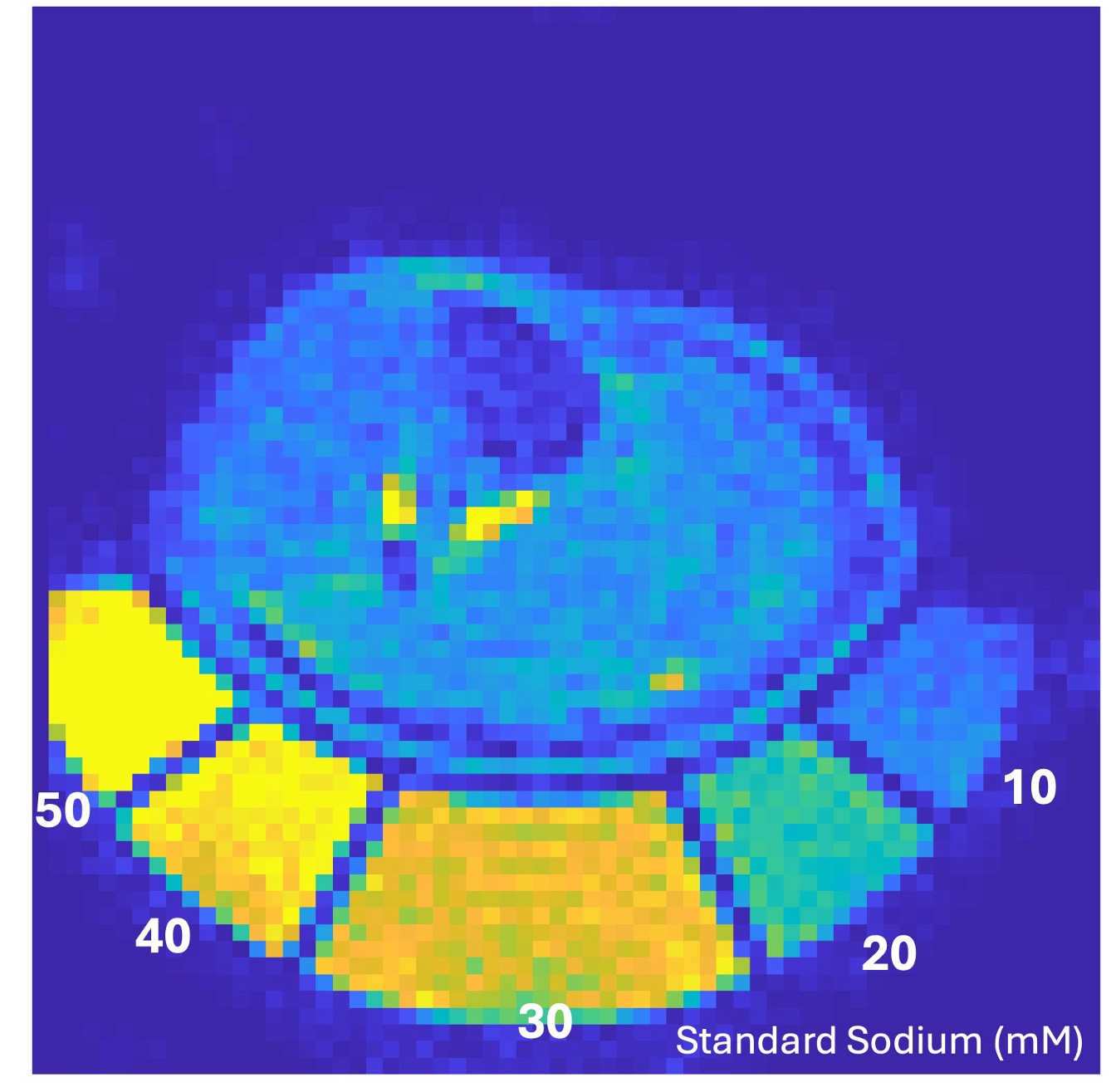
Atopic dermatitis is one of the most burdensome skin diseases globally, yet its response to treatment remains highly variable. This project utilizes a novel, non-invasive sodium MRI technique to evaluate how excess dietary sodium is stored in the skin due to poor barrier function. Our aim is to understand the relationship between skin sodium and immune-driven inflammation and to determine whether skin sodium levels can serve as a key indicator of disease severity and persistence.
Preclinical Focus
Neurodegeneration & Metabolism
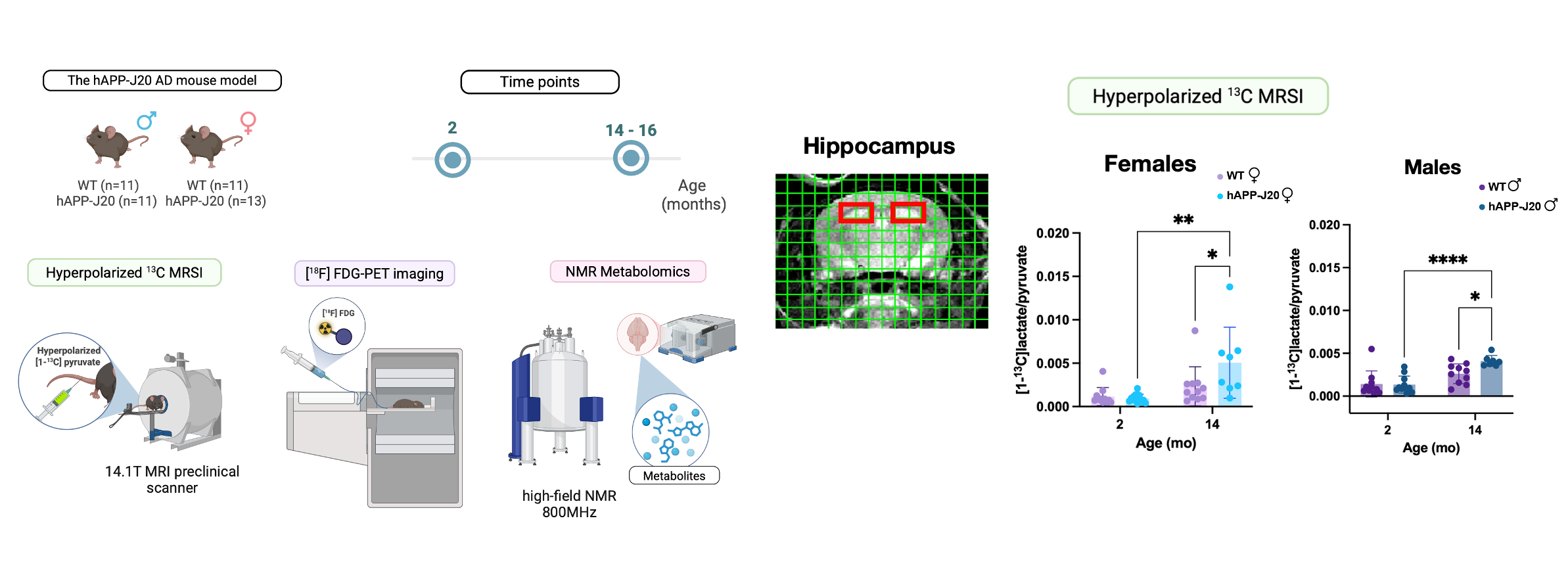
The lab focuses on the preclinical application of hyperpolarized ¹³C MRI to study real-time brain metabolism in models of Alzheimer’s disease. Using advanced metabolic imaging in transgenic mouse models, the work quantifies dynamic metabolic fluxes across glycolytic and oxidative pathways, enabling the detection of early and progressive dysfunction not captured by conventional approaches. The lab investigates multiple facets of Alzheimer’s disease biology—including amyloid-β pathology, ApoE4-driven risk, and sex-specific effects—to better understand disease heterogeneity. By integrating hyperpolarized ¹³C MRI with complementary techniques such as FDG-PET, NMR metabolomics, and cell-specific perturbations, the goal is to define how genetic and cellular mechanisms disrupt neuroglial metabolic coupling and to support the development of targeted metabolic interventions.
Deuterium Metabolic Imaging of the Brain Using 2-Deoxy-2-[2H2]-d-glucose
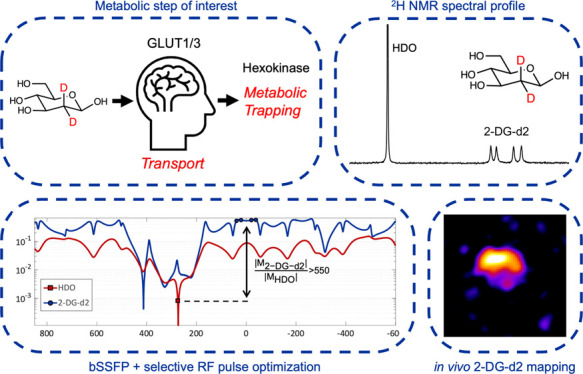
We used a spectrally selective multiband radiofrequency pulse and balanced steady-state free procession (bSSFP) technique, enabling rapid 2H imaging with high specificity and sensitivity to 2-DG-d2. Both in vitro and in vivo validations demonstrated the sequence's ability to suppress endogenous water signal. Mapping of 2-DG-d2 with high spatial resolution was achieved in healthy mouse brains, comparable to what might be obtained using [18F]FDG PET. The numerous applications of [18F]FDG PET, as well as recent clinical translation of the natural abundance 2-deoxy-d-glucose (2-DG) parent sugar, suggest that DMI using 2-DG-d2 may be applied to patients in the future.